.png)

Should I track my sleep?
- Amelia Scott

- May 18
- 5 min read
Updated: May 19
We're all tracking our sleep these days...
For many people invested in their sleep, the day begins with a number. Before getting out of bed, they reach for their phone or glance at their wrist to see how they slept. A good night is elating and motivating, but a poor night drains some of the colour from the hours that follow.
As a sleep psychologist, I often hear from patients who bring in detailed sleep data from devices like the Oura Ring, Fitbit or Apple Watch. They are usually curious, but often a little anxious about what the tracker seems to be telling them.
The surge in sleep tracking sits alongside a broader rise in awareness about the importance of sleep, and a growing desire to measure and optimise it.
While the technology behind these devices continues to improve, I’m less interested in whether the data are “right” or “wrong”, and more concerned with the assumptions built into wearables, and the subtle ways their feedback can shape how we feel.
In particular, sleep trackers tend to suggest two things:
That a night’s sleep (and its effect on us) can be reliably summarised by a score, and
That we have more control over our sleep than we really do.
The appeal of trackers
Our interest in sleep tracking comes from our desire to continue to understand and improve ourselves. It can help us answer questions like: Why am I tired some days? What effect does alcohol have on me? How can I measure progress toward my goal of valuing sleep more?
These questions (and many more) make complete sense and come from good intentions.

Influence beyond accuracy
Sleep is highly complex to measure, and even the gold standard method (polysomnography) involves interpretation and room for error. While they are improving, consumer wearables are best understood as providing educated guesses rather than definitive accounts of how we slept.
Accuracy aside, this data doesn’t just measure and report our sleep, it shapes how we interpret it. I’ve heard many stories of people waking up feeling reasonably okay, perhaps with the mild grogginess that often follows sleep. After checking a tracker that reports suboptimal, restless sleep, that same grogginess is suddenly reinterpreted as evidence of a problem.
Tension around the eyes becomes evidence of sleep debt, rather than a need to hydrate and moisturise. A yawn at the gym becomes “I’m already exhausted and it’s only 7am”, rather than a common, non-specific experience. Forgetting the milk, forgetting to pack lunch, or misplacing the car keys* all start to feel like proof that the cognitive benefits of sleep are slipping away.
*As an aside, all of these things happened to me in the past 24 hours - not as signs of poor sleep, but as part of being a normal human, a working parent, and an occasional ball-dropper.
Sleep tracking shapes our experiences
The influence of our sleep data on our expectations for the day ahead, as well as the meaning we make while living our days, is significant. Experimental studies show that even false feedback about sleep can shape how we feel the next day. People told they slept poorly report worse fatigue, mood, and alertness, even when their actual sleep was unchanged.
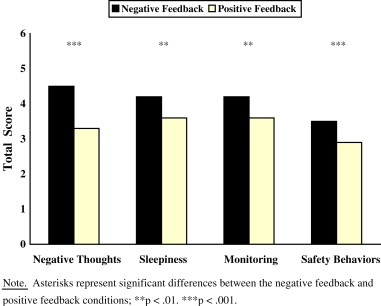
These experimental studies have been consistently replicated and show the same results - that giving somebody a 'poor sleep' score will influence their mood, fatigue and activity levels.
The question of control
And then there’s the issue of control. Wearables can subtly imply that sleep is something we should be able to manage and optimise. In reality, many of the factors reflected in their summary data sit outside our direct control.
We can influence sleep around the edges, through things like our routines and sleep environment, but much of what shapes our sleep is determined by things like our genes, age, hormones, health and life stress.
We can’t will ourselves to get more sleep than our bodies need, make our brains generate a higher percentage of deep sleep, or engineer a night without any awakenings.
When people start trying to control sleep too tightly, effort and anxiety tend to increase, and sleep often becomes harder rather than easier. In this sense, the promise of control can be one of the most unhelpful messages built into sleep tracking.
So, should I stop tracking my sleep?
If you are somebody who has set an intention to value and protect your sleep a bit more, and you find the notifications and summaries pass you by without much influence, then perhaps your tracker is a valuable companion.
A perfect example would be my client Louisa* who noticed that drinking alcohol was affecting her sleep and daytime energy. Observing this with her sleep tracker helped her to change her relationship with booze and experience the benefits of it.
*Name has been changed.
Some people also find value in the broader patterns these devices capture, particularly around stress and recovery. Metrics like heart rate variability or resting heart rate often offer a signal that we are under more strain than usual. Used this way, trackers can function more like biofeedback and invite you to reflect on the pace you've been moving at. The key difference is that the data supports your awareness, rather than replacing it.
When to stop and check in with yourself.
If your curiosity and good intentions have slipped into obsession, anxiety or unhelpful perfectionistic striving for the perfect night of sleep, perhaps it’s time to take a break.
When to pause your sleep tracker:
You trust its judgement about how you should feel, rather than your own bodily intuition
You check it first thing in the morning, and let the score dictate what you do
You feel deflated when your score dips below a certain 'number'
You are carrying unhelpful numbers in the back of your mind all day (especially if it's some sort of 'cumulative sleep debt!')
How can I judge my sleep then?
Consider this an invitation (or enthusiastic encouragement!) to trust your own signals across the day. Let the intelligence of your body tell you how you slept by listening to it throughout the day, and thinking carefully about what it needs.
Are you feeling tired or sleepy?
Do you need movement or rest?
Does your body want caffeine or some water?
A tracker can offer you an isolated data point, but it cannot tell you how your body should feel and what you need.
Closing thoughts
Sleep trackers can help us on a journey toward better health. Beyond whether they are right or wrong, we need to think about the subtle ways they are affecting our judgements and beliefs.
For many people, they have too much influence and authority, and we are starting to organise our lives around data-driven judgements rather than the wisdom of living in our own bodies. If you are wondering if your tracker has taken on too much power, consider going without it for a little while and tuning into your physical cues.


Comments