
“I dread going to bed.”
THE INSOMNIA PROGRAM
A five-module, six week, self-paced program grounded in sleep psychology framework. The Insomnia Program is designed to help you address the root cause of insomnia by understanding how sleep works, and how we tend to get in the way.
Sound familiar?
Dr Amelia Scott, Clinical Psychologist
“I dread going to bed.”
“I lie in bed for hours.”

“My nights are unpredictable.”
“I can’t focus the next day.”

“I’m running on empty.”

“I’ve tried everything. Nothing sticks.”
Not sure it’s right for you? See who this program isn’t suited to.
“The aim of this program is to help you get control back and focus on your life.”
Dr Amelia Scott, Clinical Psychologist
As Seen In









Dr Amelia Scott
A structured, evidence-based path using principles of CBT-I, combined with Acceptance and Commitment Therapy (ACT).
Learn to meet sleep with ease, instead of dreading what the night might bring.
This is not a quick fix: it aims to give you a deep understanding of your own sleep, so you can feel confident in the longer term.
One clear, structured path instead of piecing together advice from a dozen different sources.
As sleep becomes less of a daily battle, it can free up energy and headspace.
A way to understand and loosen the vicious cycle of anxiety and sleeplessness at 3am.
The program is a guided journey, but you can access the videos in a way that fits around your life.
See inside
Everything sits in one place you can open on your phone, tablet or computer, whenever it suits you.
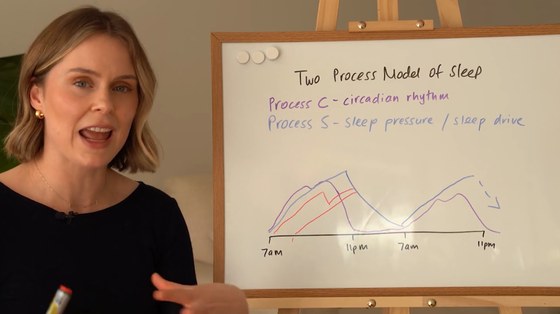
Dr Amelia Scott walks you through each idea on video.

Complete a questionnaire about your insomnia symptoms at the beginning and end.
Lessons are released in order with your progress ticked off as you go.
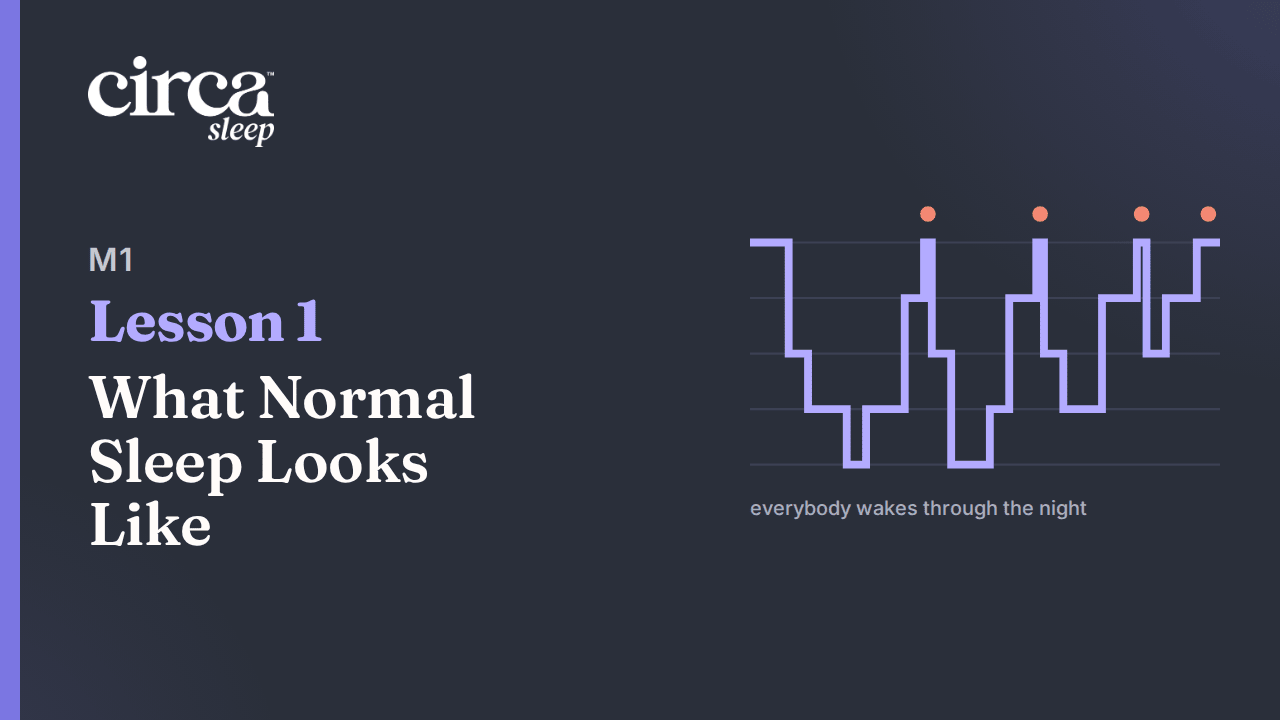
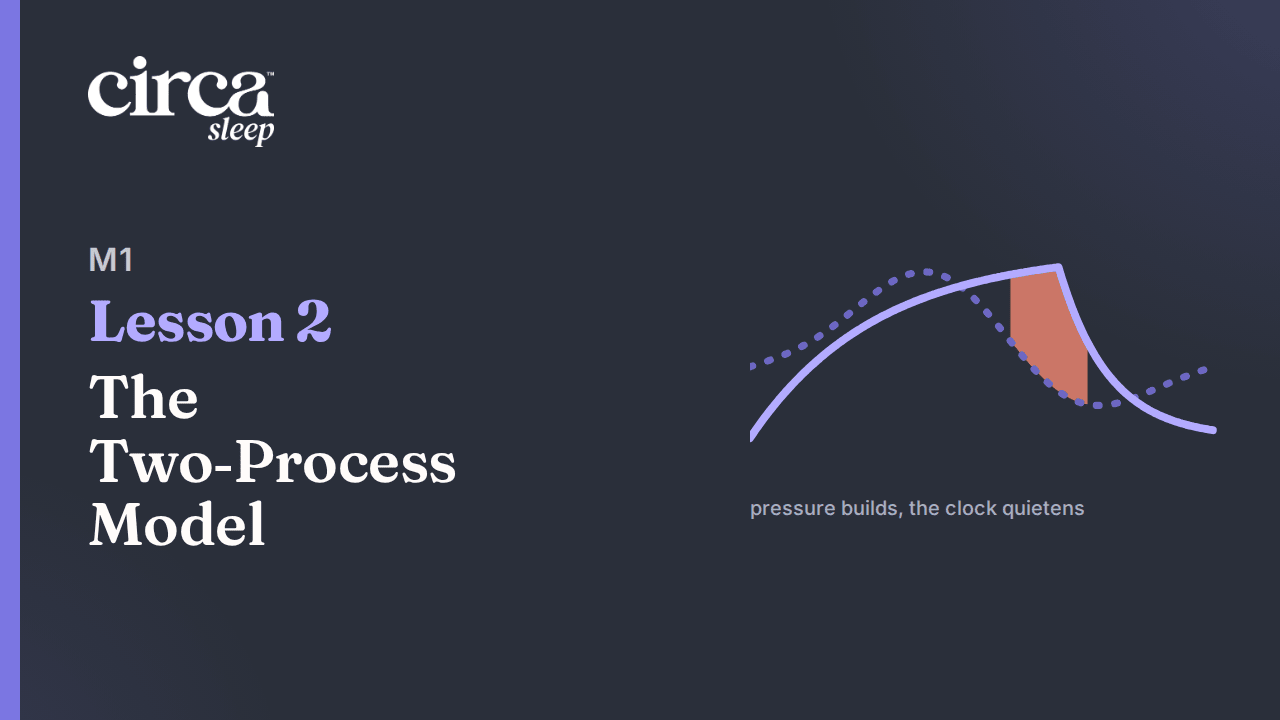
Download the key points and diagrams from each lesson to keep.
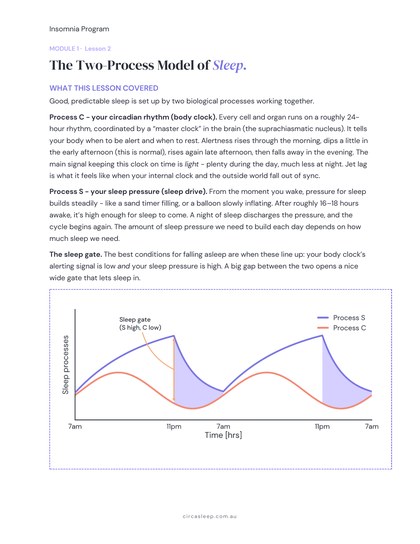
Fill it in each morning about the night before. Best guesses are fine.
CBT-I is the treatment with the strongest evidence base for chronic insomnia. Here, it's delivered the way it's used in one-to-one practice. Built from real sessions.

You can reach out to Amelia any time with questions about the program and your sleep.
This is a carefully-structured program, designed to be worked through sequentially.
Foundational knowledge, and some myth-busting, about sleep and insomnia. Start your sleep diary now.
3 lessons · includes a questionnaire about your insomnia symptoms
The key strategies for more consolidated, consistent sleep. This is the heart of the program.
4 lessons
Insights and strategies for managing tiredness and energy through the day.
3 lessons
An in-depth look at the cycle of sleep anxiety and poor sleep, with plenty of strategies to break it.
5 lessons
A recap of the key strategies, and guidance on moving forward with your sleep.
3 lessons · re-take the questionnaire about your insomnia symptoms
MEET YOUR GUIDE

Amelia is a clinical psychologist, sleep researcher and lecturer with a special interest in insomnia, sleep difficulties and the mental health concerns that often sit alongside them.
Her work brings together clinical psychology, sleep science and warm, reflective care. She supports people through insomnia, anxiety, burnout, perinatal and parenting concerns, health-related adjustment, and life changes that can affect sleep and wellbeing.
Work through the program independently, or with guidance from Amelia.
Change your mind within 21 days and we refund you in full. Email [email protected]. You do not need to give a reason, and it does not matter how much of the program you have worked through.
It may not be suitable for everyone. Section 4 of our Terms and Conditions sets out the full list. This program is not a crisis service. If you need support now, contact your GP, call Lifeline on 13 11 14, or call 000 in an emergency.
The Clinician-Guided tier opens soon.
Join the waitlist and we will email you when it opens.
The Insomnia Program is a five-module, self-paced online program built on CBT-I (Cognitive Behavioural Therapy for Insomnia) and acceptance and commitment therapy (ACT). It is the same psychological education you may receive in a 1:1 setting, delivered through short video lessons and practical worksheets you work through at your own pace.
The program runs over six weeks, with new material released gradually. The sequence of modules and lessons have been carefully planned. A lot of people find it is still a lot of information covered in a small amount of time, which is why we give you ongoing access so you can continue to work through and revisit things for 12 months from the date the program was purchased. There's no minimum requirement: lessons are short, most under 15 minutes, and you set the pace.
CBT-I (Cognitive Behavioural Therapy for Insomnia) is the first-line, evidence-based treatment recommended by general practice and sleep medicine guidelines for insomnia disorder. Research shows CBT-I is more effective than sleep medication in the long-term. It works by addressing the behaviours and thought patterns that keep insomnia going, rather than just managing symptoms.
ACT (Acceptance and Commitment Therapy) is a newer approach to insomnia with a growing evidence base. ACT helps you change your relationship with sleep rather than fight to control it. The harder people chase sleep, the more it tends to slip away, and that struggle is part of what keeps people awake. Instead of battling anxious thoughts or forcing sleep to happen, ACT helps you ease that struggle and keep living the life that matters to you, rather than putting it on hold until your sleep is “fixed.”
CBT-I is the first-line treatment for chronic insomnia, and it’s the practical engine of this program: using your own sleep patterns to rebuild steadier sleep and loosen the habits that keep insomnia going. ACT shapes how those tools are delivered: with less pressure and less alarm, and room for the reality that change takes time. The resulting program aims to be both practical and gentle.
This program is designed for insomnia specifically, not sleep apnoea or other diagnosed sleep disorders. If you suspect you may have sleep apnoea (loud snoring, gasping for air during sleep, excessive daytime sleepiness), please see your GP or a sleep specialist for proper assessment before starting.
Through short video lessons (between 5-15 mins) by Dr Amelia Scott paired with downloadable worksheets and guides for each module, so you can watch, then actually apply what you've learned.
Anyone who's had ongoing trouble falling asleep, staying asleep, or waking too early, and these symptoms have started to cause distress or interfere with day-to-day life.
This program is built for adults whose main problem is chronic insomnia: trouble falling asleep or staying asleep at least a few nights a week, for a while now, and it is affecting your day-to-day life. You need to be 18 or over to enrol.
Part of the program involves matching the time you spend in bed to the amount you are actually sleeping, so your nights become more solid. You are not asked to sleep less than you already do, and the window is widened as you go. Even so, most people feel sleepier during the day for the first two to three weeks. For most people that is mild and short lived. For some people it is worth a conversation with a GP first.
Please talk to your GP or another treating health professional before enrolling if any of these apply to you: you snore loudly, wake gasping or choking, or have possible sleep apnoea that has not been assessed; you regularly fall asleep without meaning to during the day; you drive long distances, operate machinery or do other safety-critical work; you have been diagnosed with bipolar disorder; you have epilepsy or another seizure disorder; you sleepwalk, have night terrors or act out your dreams; you have another sleep disorder that is not currently treated; you do night shifts or rotating shift work; or you are going through a mental health crisis or have had recent thoughts of harming yourself.
Some of the strategies are harder to apply when your nights are already broken by someone else, for example if you are pregnant or caring for an infant. You can still do the program, but we recommend seeking guidance while you work through, so you can tailor the strategies to accommodate overnight interruptions.
We don't screen or approve anyone. The program does not involve a formal screen or application to determine your suitability. It is your decision whether the program is right for you before you enrol. If you enrol and then decide it isn't right for you, email us within 21 days and we'll refund you in full, no reason needed.
If you're in crisis or having thoughts of harming yourself, please don't wait for a program. Call Lifeline on 13 11 14, or 000 in an emergency.
You can request a full refund within 21 days of purchase. You do not need to give a reason, and it does not matter how much of the program you have worked through.
Email [email protected] from the address you used at purchase. We refund to your original payment method within 5 business days, and your access ends once the refund is processed. If you are paying by instalments, we refund every instalment you have paid and cancel the remaining ones.
After 21 days we do not offer refunds for a change of mind. This does not limit your rights under the Australian Consumer Law.
Every person's experience is different, and results often depend on how consistently the strategies are applied. The program is designed to help you rebuild a healthier, more reliable relationship with sleep. People taking part in similar programs report significantly fewer symptoms of insomnia, significantly less time awake overnight (including time taken to fall asleep, and time awake in the middle of the night). Most people also experience improvements in symptoms like fatigue, low mood and quality of life.1
1 Hwang JW, et al. Systematic review and meta-analysis on fully automated digital cognitive behavioral therapy for insomnia. npj Digital Medicine 2025;8:157.
The lessons follow a set curriculum, the same five modules for everyone. What is personal is the data you bring to it. Your sleep diary is built around your own nights, and how you apply each strategy comes from what your own patterns show.
You also complete the Insomnia Symptom Questionnaire, a short validated sleep questionnaire, near the start of the program and again at the end. It gives you a straightforward before and after: where your sleep was when you started, and where it is once you have worked through the material, so you can see what has actually shifted rather than relying on memory. The score describes how you answered on the day, not a diagnosis.
Setbacks are addressed directly in Module 5, which includes a simple plan for handling occasional bad nights, because progress with sleep is rarely a straight line, and one rough patch doesn't undo what you've learned.
Taking sleep medication should not stop you looking at alternative ways to understand and address insomnia. Many people begin CBT-I while taking something (prescription or over-the-counter). Any decision about your medication should be made in consultation with your prescribing doctor. This program will never tell you to start, stop, or adjust it.
The research examining combined pharmacological and behavioural treatments suggests that ongoing medication use may result in slower progress than without. We think this is because CBT-I helps you learn that your body can produce sleep on its own, and medication tends to prevent people from learning this.
However, a growing body of research suggests that CBT-I may be a valuable first step for people who are considering reducing their use of sleep aids and sleep medication. Once some CBT-I strategies are in place and confidence has grown, many people feel ready to talk to their prescriber about gradually reducing medication.